
 Junio
You have a fortnight of leave, a brochure showing a boat the colour of cream, and a creeping worry that you will spend the whole trip rushing between temples in the heat. The shape of the journey matters more than the choice of cabin.
How the River Trip Is Usually Laid Out
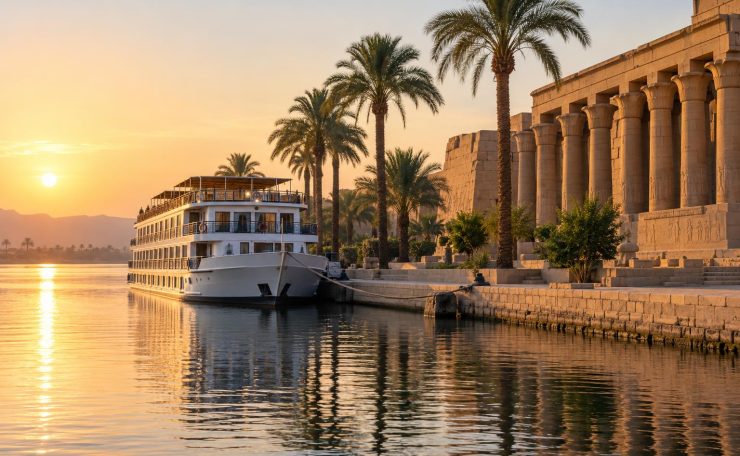
Most Nile cruises run between Luxor and Aswan, either upstream or down, and last anywhere from three to seven nights. The boat sails for part of each day and moors for the rest, leaving time ashore. Luxor often gets a full day, taking in the vast columns of Karnak and, on the west bank, the Valley of the Kings. The boat then follows the river south, calling at temples such as Edfu and Kom Ombo before reaching Aswan.
Reading an Itinerary Properly
Before you book, study a sample Nile river cruise itinerary and compare the hours spent sailing with the hours spent ashore. Look at excursion start times; a six o’clock departure to reach a temple before the heat is common, and it suits some travellers far better than others. Note which sights are included and which cost extra, and whether the trip ends in Aswan or returns to where it began.
Pay attention to the direction of travel as well. Sailing from Luxor to Aswan means the early days are packed with the biggest temples, while the reverse leaves Karnak and the Valley of the Kings for the finale. Neither is wrong, but the order changes how the trip feels, and tired travellers often prefer the highlights early in the week.
Pacing and Climate
Egypt’s heat shapes everything. From roughly November to March the days are mild; in summer, midday temperatures in Upper Egypt can be punishing, which is why many visits start at dawn. Leave slack in the plan. A morning on foot followed by an afternoon on the sun deck, watching palms and farmland slide past, is not wasted time. It is the part of the trip that gives the rest of it room to sink in.
Ask about the boat’s size and the number of cabins, too. Smaller vessels feel calmer at the dock, when several boats moor side by side and passengers cross neighbouring decks to reach the shore.
What to Pack for a Boat and a Temple
Light long sleeves and trousers cover shoulders and knees for temple visits and keep the sun off your skin. Bring sturdy sandals or trainers for uneven stone, a hat, sunscreen, and a small torch for dim tomb interiors. Carry some cash in small notes for tips. Dress on board is usually relaxed, with perhaps one slightly smarter outfit for a farewell dinner.
Food and water deserve a thought. Bottled water is the norm, a stomach remedy is sensible to carry, and a reusable bottle reduces waste. If you have dietary needs, say so well before departure rather than at the first dinner.
Making the Most of Aswan
The journey tends to finish in Aswan, a gentler city where the river breaks around granite islands. A sailing felucca at sunset is the traditional way to see them. The temple of Philae, moved to Agilkia Island to save it from the water rising behind the High Dam, is worth the short boat transfer, and many travellers add a day trip to Abu Simbel.
Allow a little time at the end for the Nubian villages and the souk, where spices, hibiscus tea and scarves are sold along a long main street. Haggling is expected, usually with good humour, and a relaxed attitude makes it part of the fun.
Choose the length that lets you enjoy the river rather than just tick off the sights, and the trip will stay with you far longer than a rushed one.