 Junio
A prospect has read your brochure, skimmed your website and sat through a sales call, and they still say they need to think about it. What they usually want is proof that someone like them bought from you and was glad they did. A written testimonial helps, but a customer speaking on camera about their own problem is far harder to wave away.
Why Customer Stories Persuade
People trust people who resemble them. A finance director deciding on new software cares less about your feature list than about how another finance director got on during the first three months. Hearing the hesitations, the teething troubles and the eventual result in someone’s own voice answers questions that a polished sales page never will.
Video also carries tone. A pause before an answer, a smile when a figure is mentioned, a shrug about a minor hiccup: these small signals make a story feel honest, which is exactly what a sceptical buyer is listening for.
Choosing the Right Customer to Feature
The biggest name on your client list is not always the best subject. Pick someone who is articulate, relaxed about speaking and willing to be specific. Then match them to the audience you most want to reach. If your next growth area is mid-sized manufacturers, a manufacturer of that size will do more for you than a household name from another sector.
Ask permission early and explain what the finished piece will be used for. A customer who understands the plan, and who has a chance to approve the final cut, will be a much warmer presence on camera and a better advocate afterwards. It also helps to agree the rough length in advance, so nobody is surprised when two hours of conversation becomes two minutes of film.
Building the Story Before You Film
Good case study videos follow a simple arc: the situation before, the decision to change, what happened during the work, and what is different now. Write those four beats on one sheet of paper and draft questions for each. Avoid questions that invite a yes or a no. Ask what the first week looked like, what nearly put them off, and what they would tell a colleague thinking of doing the same thing.
Include at least one concrete result, whether that is hours saved, an enquiry rate, a completed project or a deadline met. Use only figures the customer is happy to share and can stand behind. Vague praise sounds like marketing, whereas a specific detail sounds like experience.
Filming Without Making It Stiff
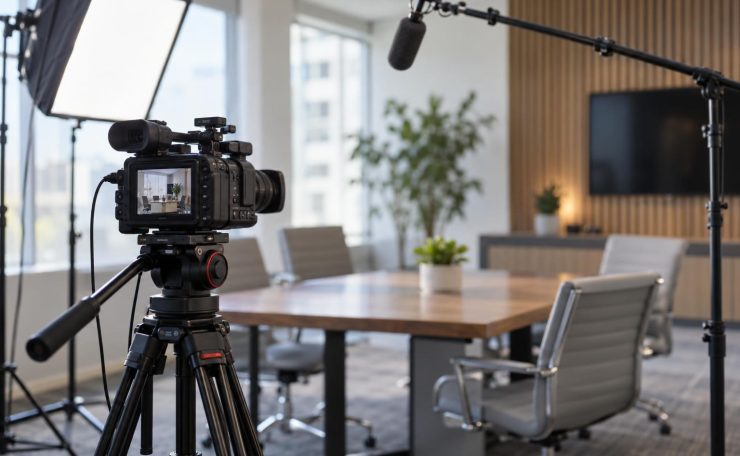
Most people tense up when a lens is pointed at them. Shoot in their own workplace where possible, because familiar surroundings relax the shoulders and give you useful footage of the real operation. Let the conversation run for a few minutes before you ask the important questions, and resist the urge to script answers. Rehearsed lines come across as stiff, and people tend to talk more freely when they feel they are simply having a chat with someone interested in their work. Keep the crew small, turn the phones off and give them a drink before you start.
Capture some extra footage of hands at work, equipment running and the place itself. Those shots cover cuts in the interview and make the finished film feel like a story about a business rather than a talking head against a wall.
Getting More From the Finished Film
A finished interview can serve you in several ways. Cut a ninety-second version for social media, a longer one for your website and a single striking quote for email signatures or proposals. Put the film beside the service it relates to, since that is where a visitor is likely to be weighing up the decision. Send it to prospects at the point where they hesitate, rather than burying it in a gallery that nobody visits.
Review the results every few months. If one customer story keeps getting watched to the end, ask why, and let the answer guide the next one you make.