
 Junio
You walk out to the drive one morning and the space where your car should be is empty. No broken glass, no alarm, nothing heard overnight. More and more thefts happen exactly like this, with thieves entering and driving away in under a minute, and a factory key fob that never left the kitchen counter.
How Modern Cars Get Taken Without a Key
Most newer cars use keyless entry, where the fob sends a constant low-power signal and the car unlocks when it detects it nearby. Thieves use relay equipment to pick up that signal from inside the house, pass it to the car and start the engine as though the owner were standing beside it. Others skip the fob altogether and plug into the diagnostic port to programme a blank key within minutes.
Neither method needs force, which is why the owner often finds no evidence of a break-in. It also explains why a car with a perfectly working factory alarm can still disappear.
Cheap Habits That Make a Difference
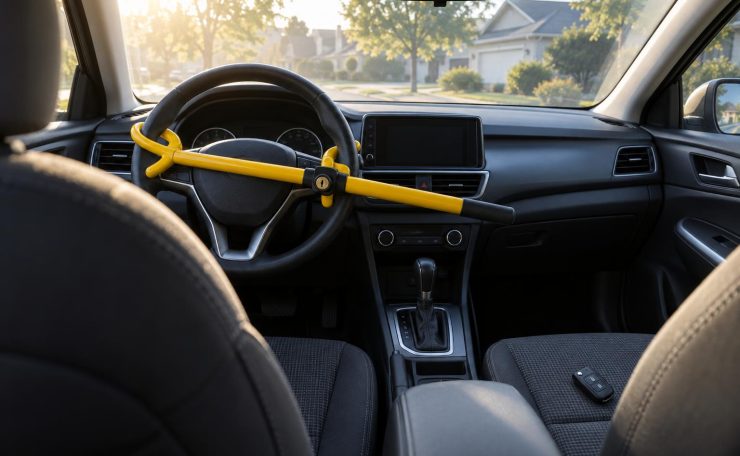
Some of the most effective steps cost very little. Keep fobs away from outside walls and windows, ideally in a signal-blocking pouch or a metal tin. Park with the front or rear against a wall or another vehicle where you can. Use a visible steering lock, because thieves prefer easy targets and a bright bar across the wheel makes a quick job look slow and noisy.
Check whether your fob has a sleep mode, which some manufacturers add after a software update, and read the handbook to see how it is switched on. Good lighting and a camera on the drive also help, and neighbours who look out for each other help more than any gadget.
Adding a Layer the Factory Did Not Fit
Habits only go so far, and many owners of higher value or frequently targeted models want a second barrier that works independently of the fob. This is where aftermarket security comes in. A tracker can help recover a car after it has gone, but an immobiliser aims to stop it moving in the first place. Local specialists often mention a car immobiliser Guildford drivers can have fitted behind the dashboard, which keeps the engine from running unless the right sequence is carried out by the person at the wheel.
Quality of installation matters as much as the product. The unit should be wired in neatly and hidden from view, not stuck under the dash where a thief can spot it in seconds. Ask what happens to your warranty, whether your insurer needs to be told and whether the system will cope with your car’s electronics after future software updates.
Talking to Your Insurer
Insurers differ in how they treat extra security. Some offer a lower premium for approved equipment, some ask for it on specific models, and some take no notice at all. A quick phone call before you buy will tell you whether the spend is likely to be recognised. Keep any receipts and fitting certificates in a safe place, because they can be useful if you ever need to make a claim.
It is also worth checking where your policy says the car must be kept overnight. A garage or locked drive can sometimes change the cover and the price.
Layers Work Better Than Single Fixes
No single measure stops a determined thief, and anyone who claims otherwise is selling hope. The aim is to make your car slower, noisier and more awkward to steal than the next one along the road. A pouch for the fob, a steering lock, a hidden immobiliser and a tidy overnight routine together turn a one-minute job into a gamble that most thieves would rather skip.